The Ultimate Content Creation Guide For 2026
Content creation can feel overwhelming when you’re staring down multiple platforms, each with its own algorithm, best practices, and audience expectations. Maybe you’re posting consistently on Instagram, but your Reels aren’t getting the reach you hoped for. Or you’re creating YouTube videos that you’re proud of, but the views just aren’t there. Perhaps you’re wondering if you should even be on TikTok, LinkedIn, or Pinterest at all.
Here’s what most creators get wrong: they either try to be everywhere at once and burn out, or they stick to one platform using outdated strategies that no longer work. The truth is, each platform has evolved significantly in the past few years, and understanding how to leverage each one strategically can transform your content from ignored to unavoidable.
In this post, I’m breaking down the universal principles that apply to all content creation, plus the specific tactics that work for Instagram, TikTok, YouTube, LinkedIn, Facebook, and Pinterest right now.
Whether you’re just starting out or you’ve been creating for years, you’ll walk away with actionable strategies to grow your audience, increase engagement, and create content that actually converts—without losing your mind in the process. Let’s get into it!
Prefer to watch instead of read? I have a YouTube video on the same topic that you can stream now!
Platform-Specific Tips
Instagram is still the visual storytelling platform, but it’s evolved significantly. Diversifying your content types keeps your audience engaged.
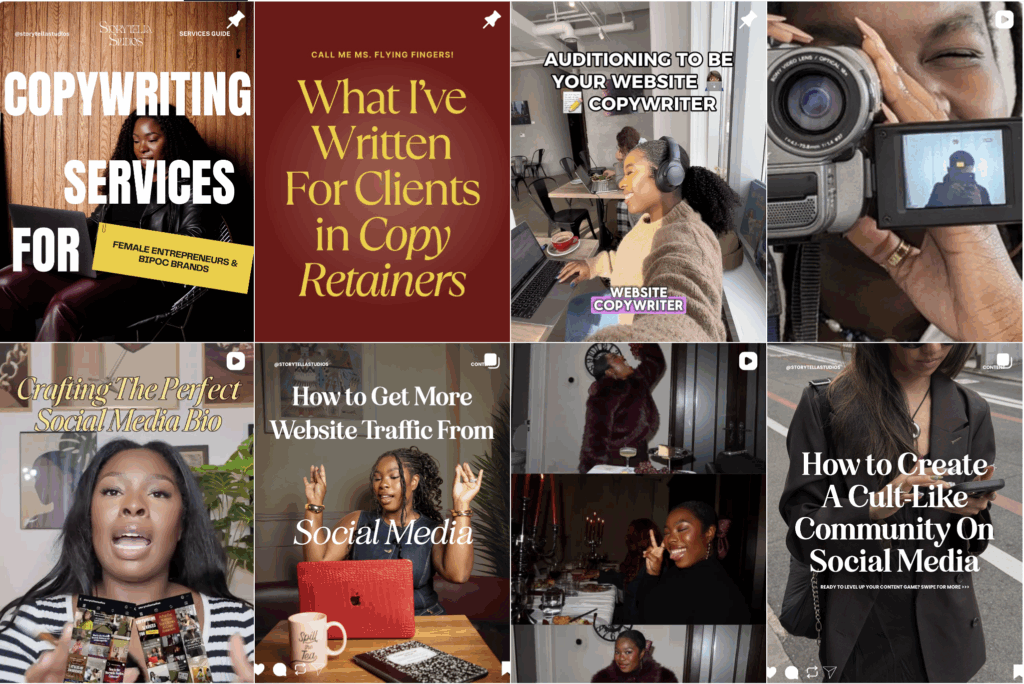
- Feed posts are still important for brand identity and SEO (yes, Instagram has SEO now). Carousel posts (swipeable posts with multiple images or videos) consistently get more engagement than single images because they increase time spent on your post. So you’ll watn to create educational carousels, storytelling carousels, or before/after transformations.
- Single image posts work great for stunning photography, quotes, or simple announcements. Video posts (not Reels) show up in feed and can be longer than Reels.
- Instagram allows 2,200 characters for captions—use them if you’re storytelling or teaching, but don’t ramble. Break up long captions with line breaks for readability.
- Instagram now recommends 3-5 relevant hashtags instead of 30. Mix popular hashtags (for reach) with niche hashtags (for targeted audience). Research hashtags your ideal audience follows, not just hashtags with high volume.
- Reels are getting the most reach right now. Optimal length varies by content—7-15 seconds for maximum reach, 30-60 seconds for more depth and building authority. Trending audio gives you a boost, but original audio makes you searchable and builds brand recognition. Text overlays make your Reels accessible and keep people watching even with sound off. Post Reels consistently—3-5 per week sees good results without burning out.
- Stories are perfect for daily connection and driving action. Engagement stickers (polls, questions, quizzes, countdowns) boost your story views and give you valuable audience insights. Link stickers drive traffic to your website, products, or content. You’ll also want to organize your highlights into 6-8 categories that align with your content pillars and feature your best stories permanently. Create story series that people expect—”Monday Motivation,” “Behind-the-Scenes Friday,” “Q&A Wednesday.”, etc.—that consistency builds anticipation.
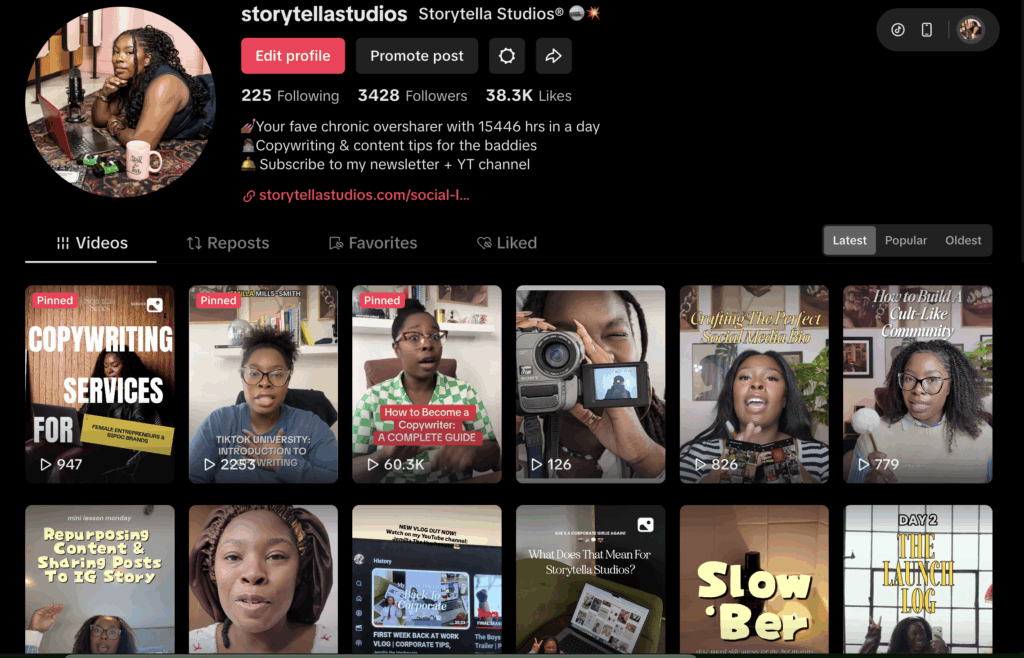
TikTok
Anyone can go viral on TikTok with the right content, regardless of how many followers you have.
Understanding the algorithm
The For You Page prioritizes watch time and completion rate above all else. If people watch your entire video and watch it again, TikTok shows it to more people. Shares are the ultimate signal that your content resonates—one share is worth dozens of likes algorithmically.
Content strategy
On TikTok, you have to balance using trends with posting original content. Niche down to build a dedicated audience, but don’t be so narrow that you limit your reach. Participate in trends while staying on brand—put your unique spin on popular sounds and formats.
Series content and cliffhangers keep people coming back, drives follows and anticipation, so lean into that!
Engagement tactics
This amplifies your reach. Comment on trending videos in your niche with valuable insights—some creators build entire audiences through strategic commenting. Use duets and stitches to add your perspective to existing content. And respond to comments with videos—this creates more content and shows you value your audience.
YouTube
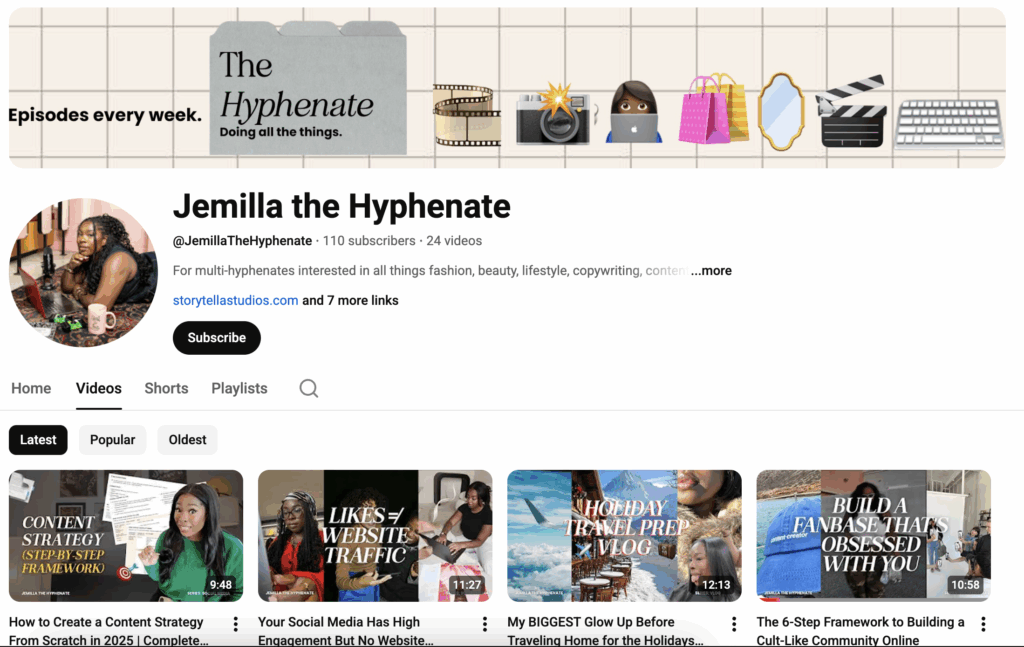
YouTube Shorts are YouTube’s answer to TikTok and Reels. They show up in a dedicated Shorts feed and have different algorithm priorities than long-form content. Shorts can introduce viewers to your channel and convert them to long-form subscribers.
Cross-posting your TikToks and Reels to Shorts makes sense, but ideally create Shorts that tease your long-form content. “Watch the full video on my channel” drives traffic to your main content.
Titles and thumbnails determines whether people click. You want to write titles that are clear, compelling, and keyword-rich without being clickbait so you create curiosity.
Thumbnail design principles:
- High contrast colors
- Readable text (large fonts, few words)
- Expressive faces (if you’re in the thumbnail)
- Consistent branding across thumbnails
Test different thumbnail styles and A/B test to see what works.
Descriptions and tags helps YouTube understand and recommend your content. You want to write detailed descriptions with your primary keyword in the first 1-2 sentences. Include timestamps, relevant links, and social media handles.
Engagement tactics boost your video in the algorithm. Pin a comment asking a question to encourage responses. Respond to comments, especially in the first hour after posting—this signals to YouTube that your video is sparking conversation. Design end screens that promote your best videos and encourage subscriptions. And create playlists that group related videos for binge-watching.
Analytics and optimization guides your content strategy. Watch audience retention graphs—where do people drop off? Improve those sections. Click-through rate (CTR) shows if your title and thumbnail work, average view duration matters more than total views, and traffic sources reveal how people find you. Use this data to create more of what works and fix what doesn’t.
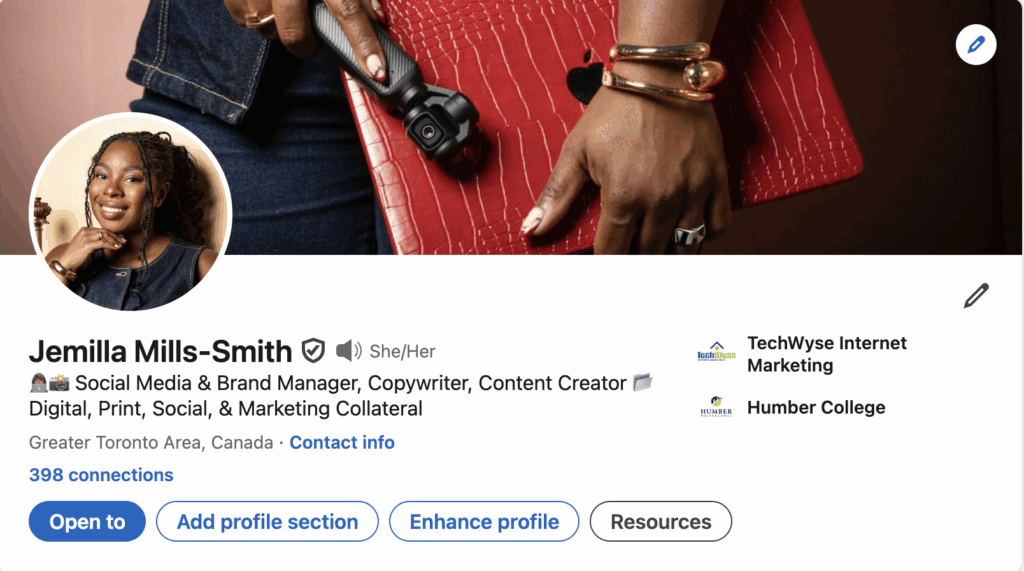
LinkedIn is underrated for content creators and business owners. The audience is professional, engaged, and has purchasing power!
Having a professional content approach means being authentic without oversharing.
- Thought leadership posts share your unique perspective on industry topics
- Industry insights and commentary position you as someone who understands the landscape
- Personal stories with business lessons connect emotionally while staying professional
Balance vulnerability with professionalism—share struggles and lessons learned, but maintain the credibility your industry expects.
Content formats on LinkedIn work differently than other platforms.
- Text-only posts surprisingly get great engagement
- Native video performs better than YouTube links
- Articles (LinkedIn’s publishing platform) establish authority but get less reach than regular posts.
Engagement strategy on LinkedIn is relationship-driven.
- Comment thoughtfully on others’ content—this is how you build your network and get discovered
- Tag and mention people when relevant, but use this sparingly and genuinely
Facebook’s organic reach has declined a lot, but it’s still valuable for certain audiences and purposes.
- Facebook now prioritizes video content, especially live video, and groups see better engagement than Pages. Build a group off your main page for deeper connections. Create engagement through questions, polls, exclusive content, and consistent moderation. Some creators monetize through subscription groups or by building communities for courses and programs, so consider that, too!
- Native video uploads (don’t share YouTube links—upload directly), stories (yes, people still use Facebook Stories), and surprisingly, long-form text posts that spark conversation perform really well

Pinterest is a visual search engine, not social media, so keyword research is essential. Use Pinterest’s search bar to find popular keywords in your niche. Write SEO-optimized descriptions with keywords in the first sentence. And organize boards by topic with keyword-rich titles and descriptions.
Pin design follows specific best practices.
- Vertical format (2:3 ratio, typically 1000×1500 pixels) performs best
- Text overlays are crucial—people search Pinterest for solutions, so your text needs to communicate value immediately. Create multiple pin designs for one piece of content to test what resonates.
Universal Content Creation Tips
Planning and Batching
- Plan themes by month (or, if you’re a business owner, by the offer you’re trying to sell), topics by week, and specific posts by day. This prevents the daily panic of “what should I post today?” And use tools like this very resource, HeyOrca, Later.com, Trello, Google Calendar, or specialized content planning apps.
- Dedicate one day to recording multiple videos or taking multiple photos. You’re already setup, in the zone, and can knock out a week or month of content in one session!
- Create Canva templates for your graphics. Save caption formulas for different post types. And build a content library of evergreen content you can repurpose or reshare.
- Repurpose one piece of content across platforms. One blog post becomes a YouTube video, which can be 10 short-form clips, which become Instagram carousels, which become Threads posts!
Staying Consistent Without Burning Out
- The 80/20 rule applies to content creation. 80% of your results come from 20% of your efforts. Identify what’s working and do more of that. Let go of content types that drain you and don’t perform.
- If you’re burned out, your content will suffer. Schedule content breaks, batch content before vacations, or simply communicate with your audience that you’re taking time off when you need it.
- Build a content library for off weeks to give yourself breathing room. Create evergreen content that stays relevant for months. When you’re low on time or energy, pull from your library instead of forcing yourself to create something new.
- Hire video editors, graphic designers, or virtual assistants to handle the technical work while you focus on strategy and showing up, when you can afford it and don’t have the bandwidth to do it all on your own anymore.
Measuring Success
- Vanity metrics (followers, likes, views) feel good but don’t necessarily drive business results. Meaningful metrics (engagement rate, click-through rate, conversion rate, revenue generated) show if your content is working toward your goals.
- Look at your top-performing content every month and identify patterns. What topics resonate? What formats work best? What calls-to-action drive the most action? Use these insights when creating content in the future.
- Test different hooks, thumbnail styles, caption lengths, posting times, or content formats. Change one variable at a time so you know what made the difference.
How to Get Over The Hump
Creating content isn’t always easy, even when you love what you do. Every creator faces obstacles that can shake their confidence or stall their momentum. Understanding these challenges is the first step toward overcoming them.
Imposter syndrome and showing up on camera
This affects ALMOST EVERYONE who creates content. That voice in your head questioning whether you’re qualified enough, interesting enough, or polished enough? Quite common! The truth is that authenticity is what the people want, not perfections. They’re looking for genuine insight, personality, and value. Start small if you need to. Record practice videos you never post. Talk to the camera like you’re talking to a friend, or even have a friend in the room with you who makes you feel comfortable. Remember that every creator you admire felt this same uncertainty when they started.
Dealing with negative comments
It’s an unfortunate reality of putting yourself out there. Not every comment deserves your energy or emotional investment. Learn how to distinguish between constructive criticism that helps you grow and baseless negativity that says more about the commenter than about you. And if you choose deleting and blocking, or responding with grace, or simply ignoring, all power to you! Protect your mental health by setting boundaries around when and how often you read comments.
Algorithm changes and platform updates
Man, this can feel like the ground shifting beneath your feet just when you’ve found your footing, let me tell you! Platforms change all the time, and what worked last month might not work today. Stay informed about updates and stay flexible in your approach. Diversify across multiple platforms when possible so you’re not entirely dependent on one algorithm. And focus on building genuine connections with your audience—those relationships matter more than any algorithm.
Staying creative when you feel stuck
Creativity isn’t an infinite resource that flows constantly. When you hit a wall, step away from content creation temporarily. Consume content in your niche for inspiration, but also explore completely different areas. Take walks, visit new places, have conversations with interesting people. Keep an inspo bank where you capture ideas whenever inspiration strikes. Sometimes the best thing you can do for your creativity is to stop forcing it and let your mind rest.
Conclusion
Content creation is a skill, not a talent you’re born with. Every creator you admire got to where they are through practice, failure, and persistence. Your first videos, posts, or emails won’t be your best work, and that’s exactly how it should be. Growth happens in the gap between where you start and where you’re headed.
You don’t need to be everywhere, doing everything, all at once. Choose the platform where your target audience already spends time and the content format that feels most natural to you. Master that combination before expanding.
A regular posting schedule with good-enough content will always outperform sporadic bursts of perfect content. Your audience builds trust and anticipation through reliability. They’ll forgive imperfections far more readily than they’ll forgive disappearing. Set a schedule you can actually maintain, even if it means posting less frequently than you’d ideally like.
And remember: your unique perspective is your competitive advantage. There are millions of creators, but there’s only one you. Your special blend of experiences, knowledge, personality, and perspective can’t be duplicated. Stop trying to be someone else or create what you think will perform well if it doesn’t align with who you are. Authenticity isn’t just more sustainable—it’s more interesting.
I hope this blog post helped you! If you want to step up your content game in 2026, grab my Content Creator Mini Course, Hub, & Idea Vault!
This Notion-based resource has:
- Videos, worksheets, and walkthrough guides on every step of the content creation process
- A swipe file of hooks and storytelling frameworks
- A constantly-updating content & series idea vault for creators and business owners in almost every niche
- A content planner & scheduler template that makes plotting the month of content ahead SUPER easy
- A shot list & video production template that make shooting long-form & short-form content seamless
- Guidance on analyzing and optimizing your content performance
- Canva templates for you to customize your Notion resource