HEY FRIEND!
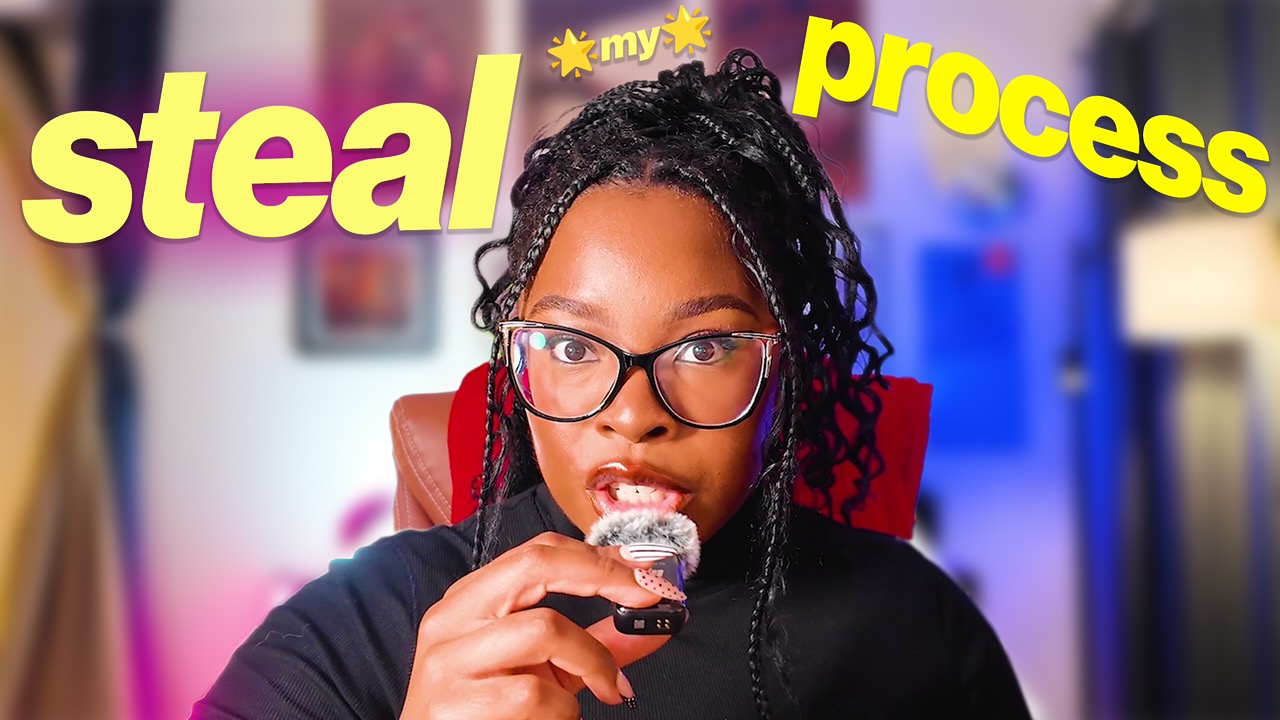
I'm jemilla!
In the past 4 years, I’ve cut my teeth strategizing & writing award-worthy, revenue-increasing, results-snatching copy. And what really lights my fire is writing for woman-owned and BIPOC-led brands. I’m talkin’ the first day after a braiding appointment type of excited! Energizing them to go big with their bold ideas so that when launch time happens, the world thinks “OMG FINALLY, I’ve been waiting for something like this.” And giving them the tools to diversify the market.
about me
services
How to Do Competitor Research The Right Way
March 16, 2026
A lot of people doing competitor research are doing it completely wrong. They’re either copying their competitors verbatim — essentially doing a glorified copy-paste job on someone else’s business — or they’re ignoring their competitors entirely and flying blind. Both are massive mistakes that could be actively costing you clients.
So in this post, I’m going to walk you through exactly how I do competitor research, step by step — the same process I use for my clients. By the end, you’ll know:
- Where you stand in your market
- What’s actually working for the people you’re up against
- And most importantly — what are the gaps that only YOU can fill
We’re talking Google searches, USP breakdowns, brand voice analysis, offer comparisons — the whole thing.
Buckle in, because it’s a doozy. Let’s get into it.
I. Start With a Google Search
Before you start obsessing over anyone’s Instagram grid, open up your preferred search engine and type in your niche, your target audience, and if you’re a location-based business, your location too.
Example: “website design for female entrepreneurs in San Francisco”
Google’s going to give you the best results on the first page. Stay there. Don’t go digging around on page 3 — we’re looking for your top three most legitimate competitors, and they’ll be right there at the top.
How to Tell if a Competitor is Worth Analyzing
First, look at the title tag — that’s the clickable title you see in the search results. It tells you the name of the business, what they do, and ideally who they serve. If they’ve taken the time to optimize that? Good sign. They’re a real business that cares about their online presence.
Next, check the meta description. If it includes the keywords you just searched, that business cared enough about their SEO to make sure those words showed up. (And just so you know — meta descriptions aren’t technically a ranking factor, but they absolutely help with click-through rates. A business that knows this knows what they’re doing!)
You’re looking for people who:
- Do what you do (or something adjacent to it)
- Serve who you serve
- Are established enough to actually be a direct competitor
Open the top three in new tabs. This is where the real research begins.
II. Dig Into Their Websites — All of It
1. Their Unique Selling Proposition (USP)
What do they say is amazing about themselves? What’s their “it” factor? What do they lead with? If you had to sum up their whole brand in one sentence based on what they’re saying on their site — what would it be?
2. Their Target Audience
Do they serve who you serve? And do they get specific about it — like, do they talk about what their audience is going through, what challenges they face, what they do for work, what they care about? The more granular, the more you can learn about whether this is actually your person, or someone slightly different.
3. Their Brand Voice
How do they talk to their audience? What’s the vibe? Are they warm and casual, or formal and corporate? Do they use jargon? Are they funny? And more importantly — does that voice actually resonate with the target audience you both share?
Listen: a lot of copywriting and social media marketing comes down to listening to your gut. You know your audience. So when you read a competitor’s website copy, you’ll feel it in your chest if something’s off. That instinct? Trust it. Either you’ll think “my audience would hate this” — and now you know what NOT to do — or you’ll think “oh wait, I would have never considered talking to them this way and it actually WORKS.” Both are gold.
4. Their Offers
What’s actually included in their services or products? Do they offer more than you? Less? Are there sign-on bonuses, first-time discounts, or freebies that are pulling people in? Note all of it.
III. Mine Their Testimonials Like a Goldmine (Because They Are)
Okay, this is the part people sleep on — and they SHOULD NOT. Testimonials are literally your target audience telling you, in their own words, exactly what they wanted, exactly what they got, and exactly how it made them feel.
That’s Voice of customer (VOC) research. And your competitor has done the work of collecting it for you.
When you’re reading through competitor testimonials, pay attention to:
- How their clients describe their situation before finding them
- The specific words they use to talk about the problem they were trying to solve
- How they describe the result — emotionally AND practically
Then take that language and use it as a blueprint when writing your own copy. Not to copy it — to understand what your shared audience actually cares about, in the words they’d actually use.
IV. The Real Point: Find the Gaps Only You Can Fill
Once you’ve gone through a competitor’s USP, brand voice, target audience, offers, and testimonials — you have everything you need to ask the most important question:
What are their strengths? What are mine? And what opportunities exist that neither of us is talking about yet?
Here’s a real example from my work: I was writing website copy for a web designer — one of my absolute favourite types of clients, by the way — who wanted to serve purpose-driven founders. People who aren’t just penny pinchers trying to get results, but who genuinely care about the work they do. They have a calling. They don’t even necessarily think of themselves as small business owners — they’re just people doing the thing they love, and they want the website to reflect that.
I found a competitor worth analyzing. Here’s what I looked at:
Their Portfolio
They had a diverse range of clients across industries. That’s an insight. I asked myself: does my client have that kind of diversity? Should we be talking about the range of industries she’s worked with? Competitor research sparked that conversation.
Their B Corp Certification
They were certified B Corp — serious social proof. My client wasn’t certified yet, but she was doing meaningful community work regardless. Instead of ignoring this, I leaned into it: let’s talk about what she IS doing right now to bridge the digital divide. Turn the competitor’s strength into an opportunity for us to demonstrate authenticity.
Their Service Messaging
I literally went line by line through their services page. What did they emphasize? What outcomes were they promising? And then — would those same messages land with MY client’s audience? Sometimes yes, and we’d put our own spin on it. Sometimes no, because her audience cared about something completely different. The research tells you which is which.
The Takeaway
Competitor research isn’t about imitation. It’s not about feeling intimidated, either. It’s about getting a clear, honest picture of the market you’re in — so you can find where you fit, what you offer that nobody else does, and how to talk about it in a way that lands.
When you do it right, you come out the other side knowing exactly where to focus your energy. Not chasing what everyone else is doing — doing what only you can do.
P.S.
I’m releasing a website copywriting guidance template that walks you through my entire process — from the brand intake, consumer and competitor research, all the way through to writing and optimizing the copy. It’s currently being beta tested and I’m making it even better. If you want first dibs, sign up for the waitlist! 👀